
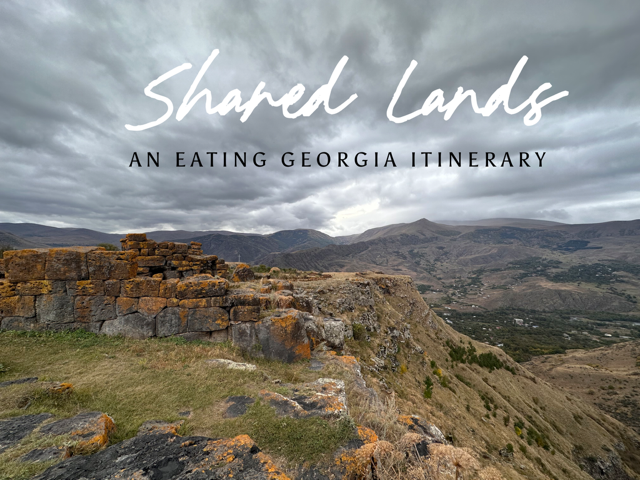
Our inaugural Shared Lands tour took place in June 2026, here are some of the highlights.
We start with a daytrip to Bolnisi, less that 2 hours south of Tbilisi, and a walking tour through the historic German neighbourhood. This famous PDO (Protected Designation of Origin) wine region is home to the descendants of 95 German colonist families from Swabia who settled in the area in 1818.
Our guide Kate tells us the story of the German settlers from the kingdom of Württemberg who were invited by Tsar Alexander I to settle in the South Caucasus. Many of them were Protestant Swabians seeking religious freedom and economic opportunity.
Originally named Katharinenfeld, the settlers built wooden 2-storey Fachwerk houses with stone basements and deep cellars. They introduced German winemaking techniques and used oak barrels rather than qvevris.
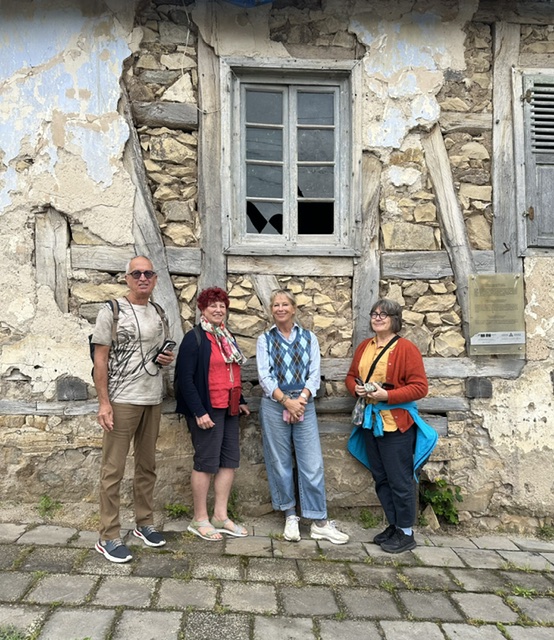
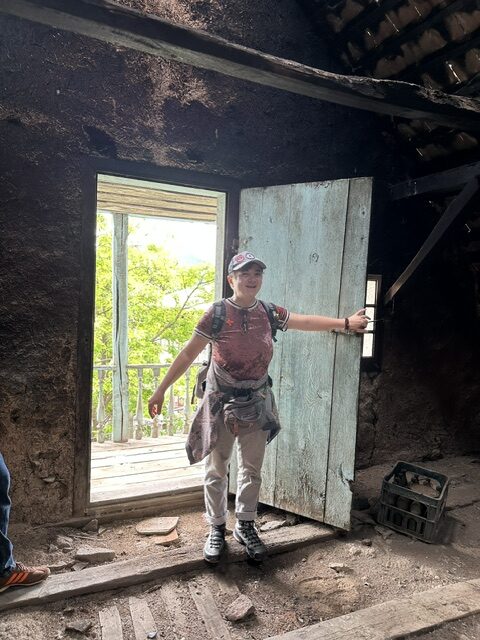
We are lucky to be able to visit one of these historic homes. Although it is abandoned, the new owners hope to renovate and restore this house, turning it into a small hotel. We see the basement cellar where wine and preserves would have been stored, there are still some old oak barrels from past times.
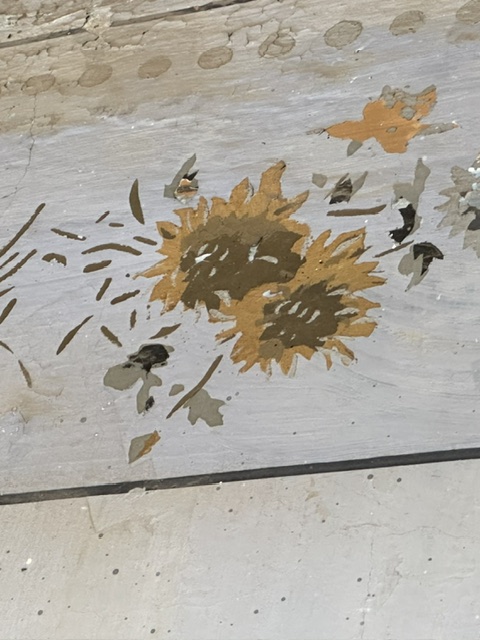
We climb a rickety staircase onto the first floor balcony, above the door beautiful floral motifs have been painted. The main room of the house has a giant wood burner and there are remnants of old photos scattered around. Another set of stairs from the balcony takes us to the attic, a huge space that would have been used for hanging and smoking meat, we see hooks fixed into the blackened roof beams.
Disveli Estate
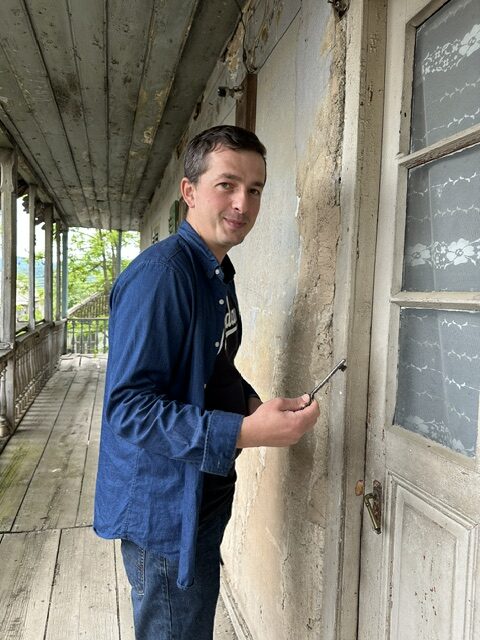
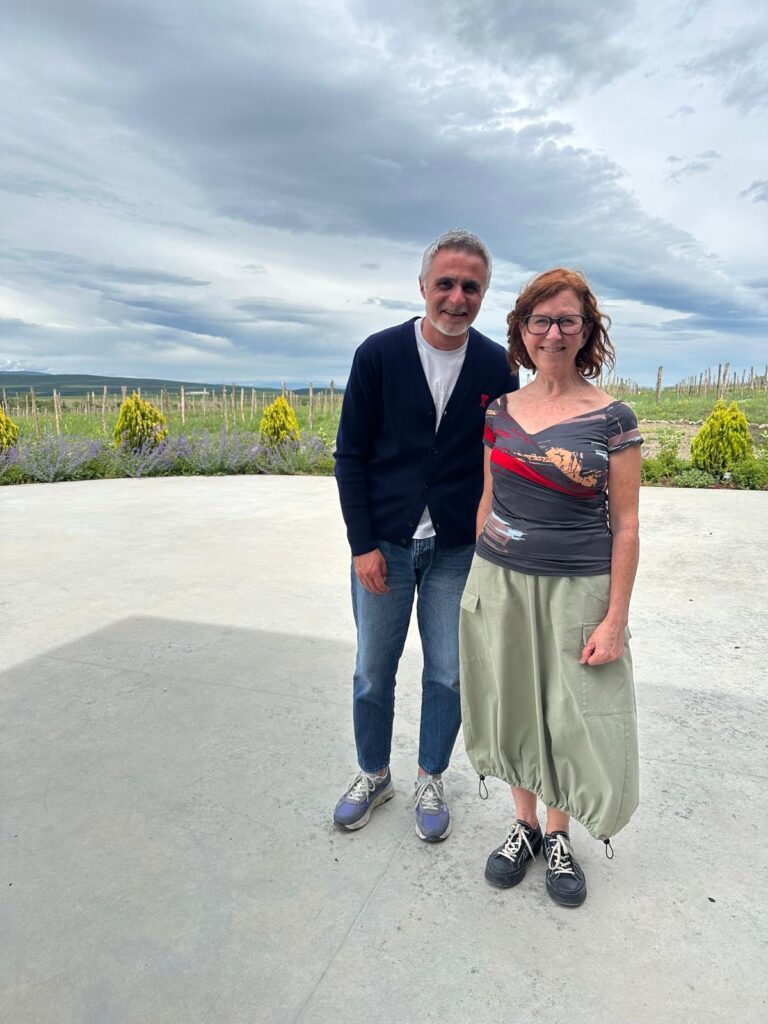
Lunch and an afternoon at Disveli Estate is always a treat. We are greeted by Berdia, the winemaker and owner.
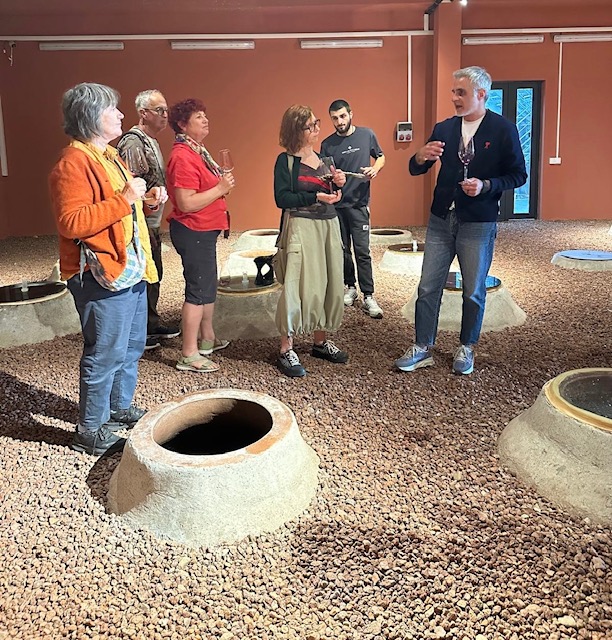
Firstly, we head to the cellar to taste the wines. Berdia explains how each wine is made, the variety and amount of skin contact. As is traditional in Bolnisi, Berdia ages some of the wines in oak barrels. We try Shavkapito, a red grape variety, made with and without oak for comparison.
We are very lucky to get to try Buza a very rare grape. There are jokes about the name boozer LOL.
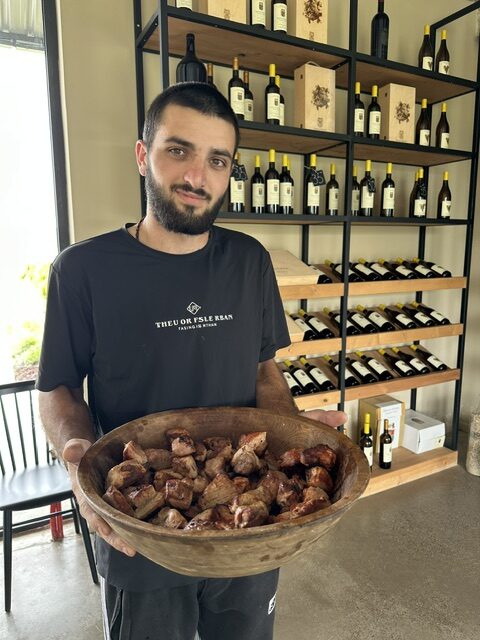
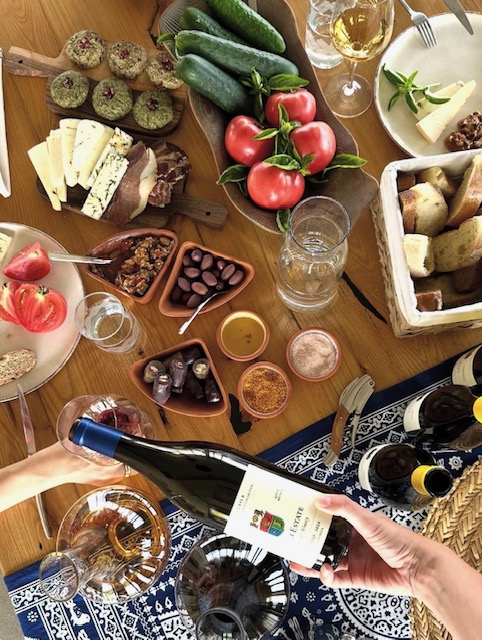
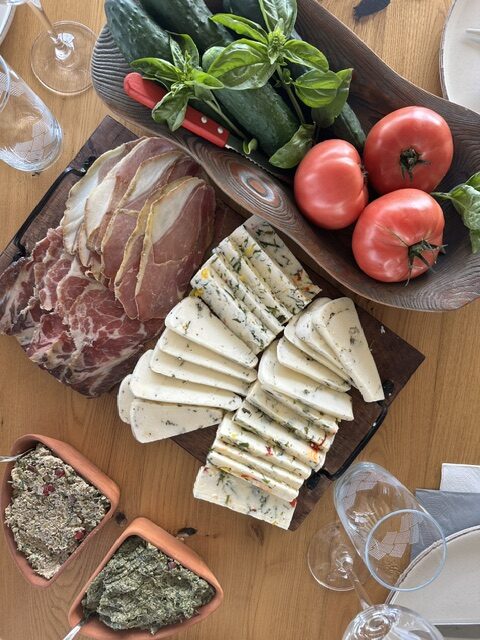
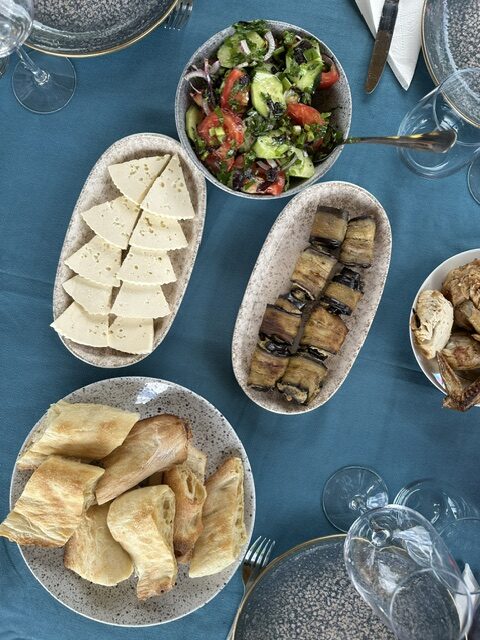
Disveli has a beautiful dining room overlooking the vineyard, filled with light. We have a simple lunch of cheese from Tsalka, Rachan ham, nettle pesto and bread. The Georgian salad is Berdia-style, a bowl of ripe tomatoes and cucumbers alongside a knife. Then a huge platter of pork mtsvadi appears, perfectly cooked by Illia who Janice and I have named “the mtsvadi (BBQ) king”.
There is of course more wine which goes perfectly with our lunch.
Berdia makes a beautiful heartfelt toast to us all. He says that when he met Sue, Janice and Kate last year he loved our enthusiasm and positive energy. The team had been counting down the months to our return visit.
Gorelovka – Georgia’s Doukhobor community
Our next adventure takes us to the very south of Samtskhe–Javakheti, and the village of Gorelovka, home to a small number of Doukhobor families. We drive through Kvemo Kartli into Javakheti; the landscape changes from green wooded hillsides to wide open plains with snow-covered mountains on the horizon. The temperature drops to a chilly 10 degrees as we climb to 2000 metres. Summer comes late to this region.
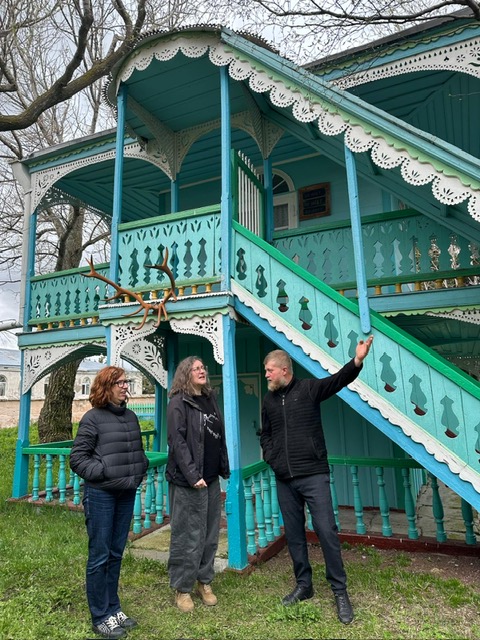
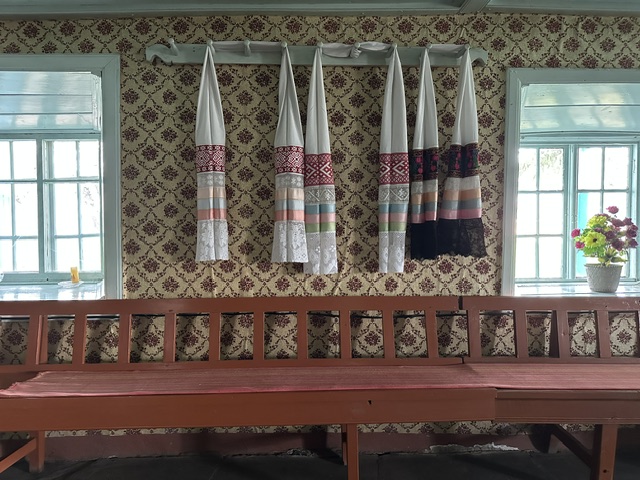
We arrive in Gorelovka and meet our host, Yuri. He tells us the story of the Doukhobor people and their journey to Georgia in 1840 after being exiled from Russia. Gorelovka became an important spiritual centre for the pacifist Christian community, and we visit their place of worship and see examples of traditional homes.
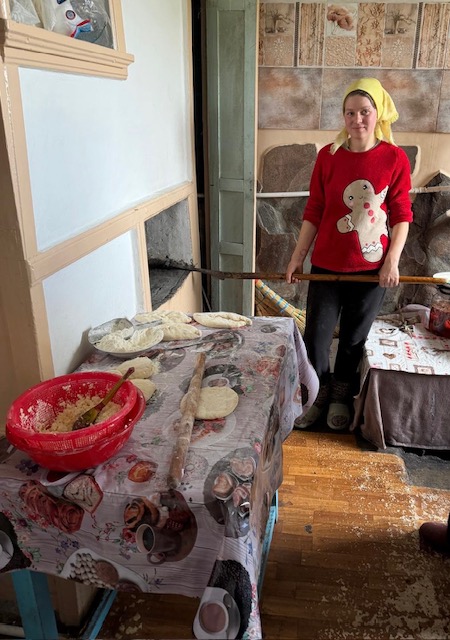
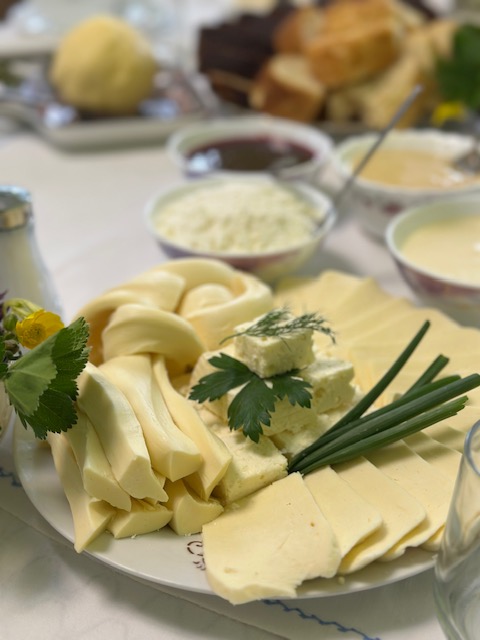
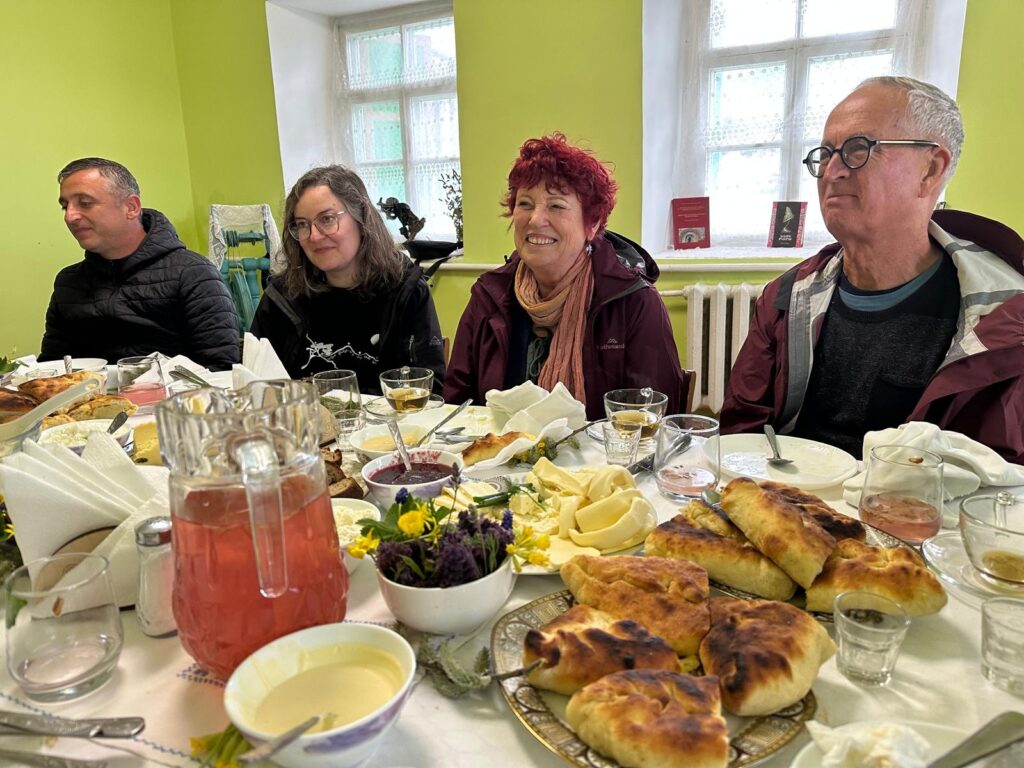
Yuri and his family host us for lunch. The table has been beautifully set by Nina and Daria, Yuri’s daughters, with flowers and foliage and a generous spread of cheeses, jams, sour cream, cottage cheese, fresh butter, honey, and bread. We have bowls of borscht to which we add huge spoons of sour cream; it is rich and unctuous, followed by handmade noodles. Then come breads, fresh from the oven, filled with potato and dill or soft rich cheese. Everyone has second helpings even though we have already eaten plenty — it is simply too delicious to resist. Everything we eat has been prepared or grown by the family or community.
After lunch we peek into the tiny kitchen where everything has been prepared. There is a huge Russian oven taking up much of the room. This is where the bread has been cooked and Daria shows us how to manoeuvre the bread loaves into the oven. Believe it or not, this oven is fuelled by dried cow dung. This is also used to heat their homes in winter. Genius.
Pankisi Valley
One hour north of Telavi in the Kakheti region is the small village of Jokolo in the lush green Pankisi Valley. This valley is home to a settlement of Kist families who left Chechnya at the beginning of the 19th century to escape conflicts in their homeland. Today they still adhere to their Muslim traditions.
We meet our guide Mari and find out a little of the history of this community. We visit the mosque and admire the intricate brick and stone work (unfortunately we can’t enter), a cemetery dating back to when the community first settled in the valley, a recently restored Christian church and an outdoor amphitheatre where concerts and plays take place. From here we have a huge view across the landscape to the Caucasus Mountains.
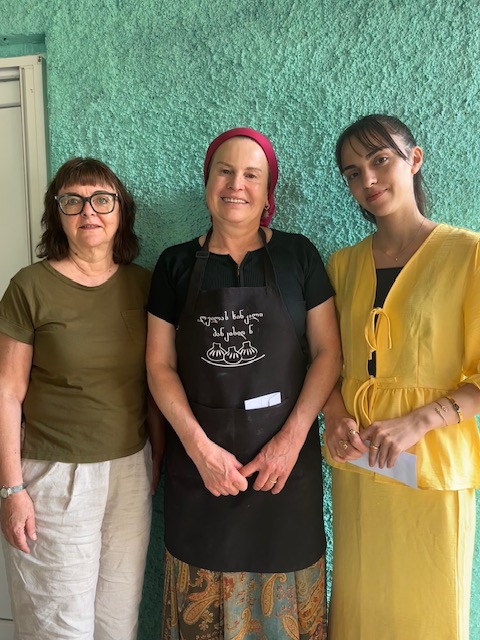
We then join Leila at her home and guesthouse for a khinkali dumpling masterclass. Elizabeth is the only guest brave enough to have a go, she does very well.
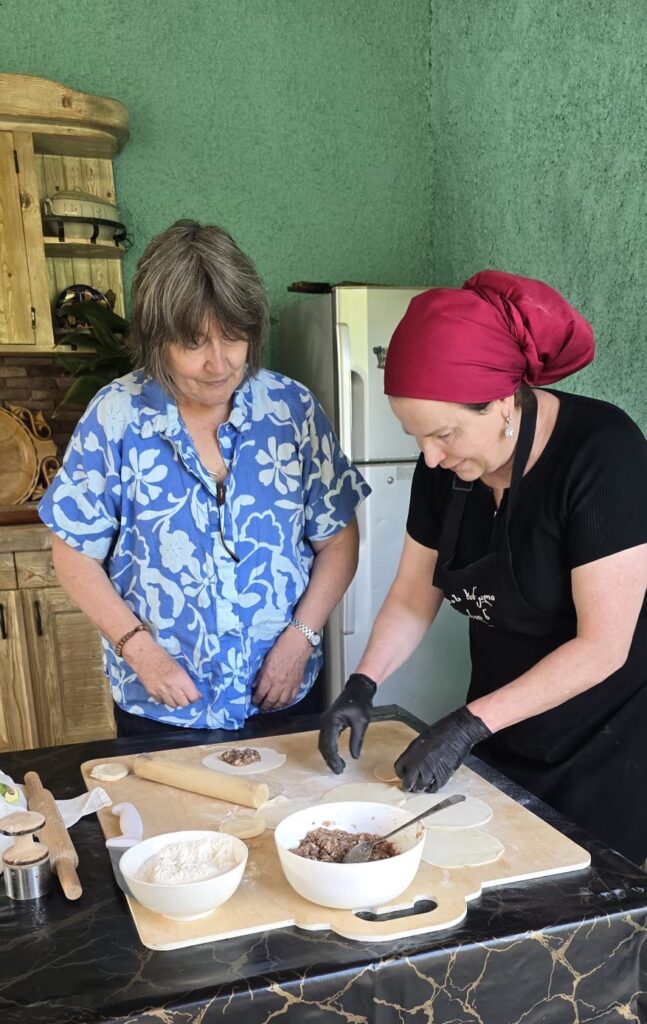
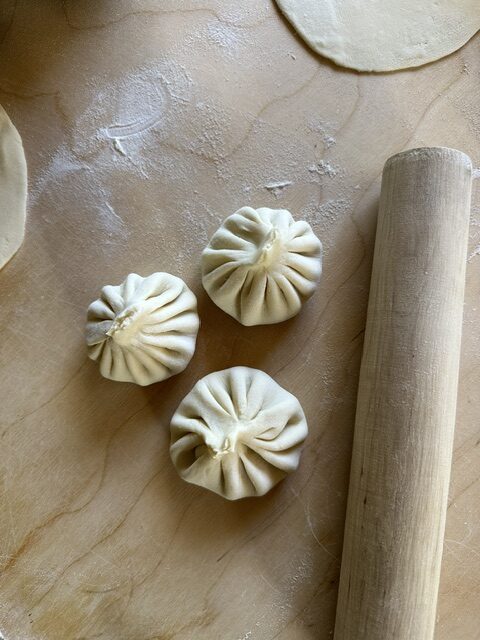
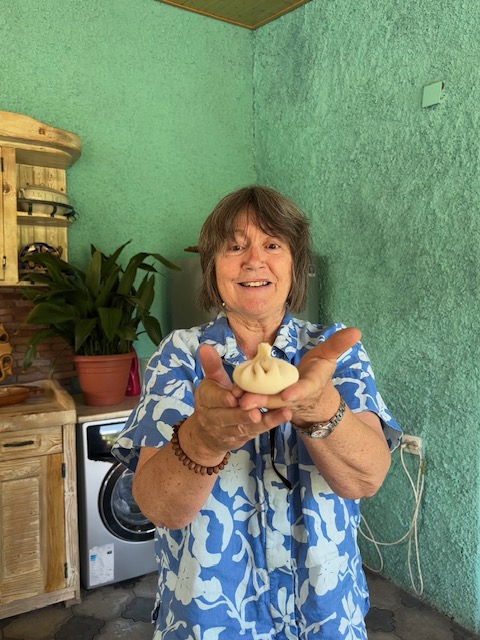
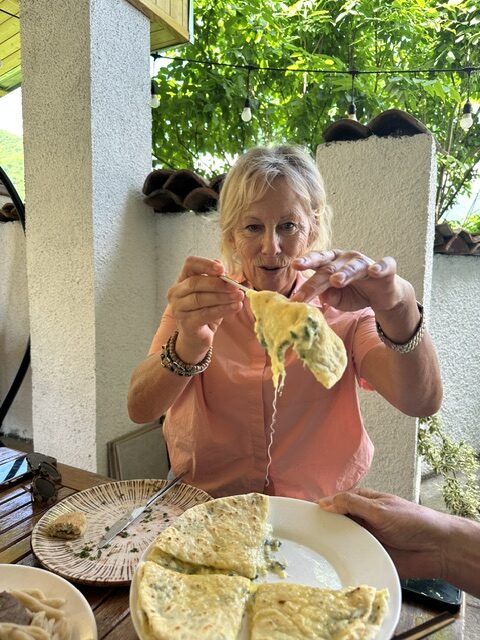
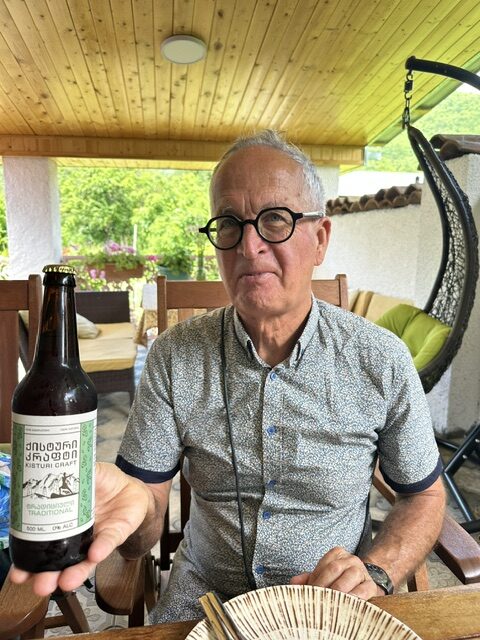
We sit down to lunch of Georgian salad, eggplant, jonjoli and cheese. There is boiled beef with hand-rolled noodles with a delicious garlic dressing to drizzle over. Khachapuri filled with cheese, wild greens and herbs – amazing. Of course khinkali, which are filled with lamb and herbs – lamb is used in khinkali in this region rather than pork. We enjoy Kisturi, a delicious non-alcoholic Chechen beer made with rosehip, black hawthorn berries and hops. This is brewed locally and now sold in restaurants in Tbilisi where it has become very popular.
To finish Leila brings plates piled high with Mawkati, incredible light as air pancakes served with yoghurt and strawberry compote. The secret ingredient, she says, is whey. These are a highlight for some of the guests (and mostly Sue). After small glasses of tea, we admire Leila’s beautiful garden, her roses are in full bloom and smell heavenly. Then it is time to say goodbye and make our way back to Ruispiri and our hotel for three nights.
Alvani – Kakheti
We spent a wonderful evening in the village of Alvani, home to a number of Tushetian families. Tusheti is a remote mountainous region in northeastern Georgia, bordering Dagestan and Chechnya, and is accessible by road for only three months of the year. Alvani was traditionally the wintering ground for the Tush people’s flocks of sheep.
Our host, Shota Lagazidze, is a warm and generous man with an infectious chuckle.
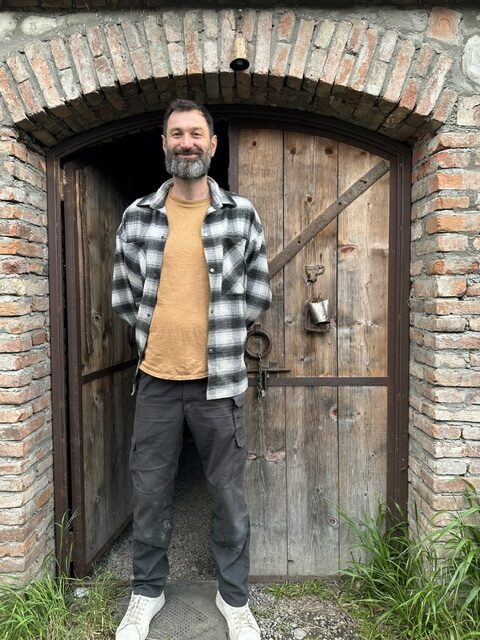
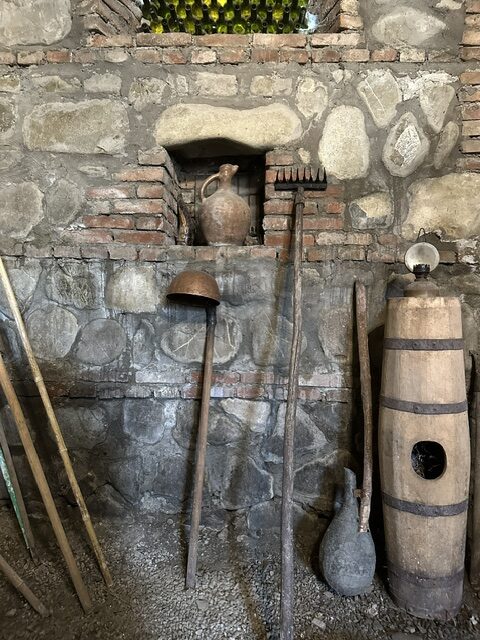
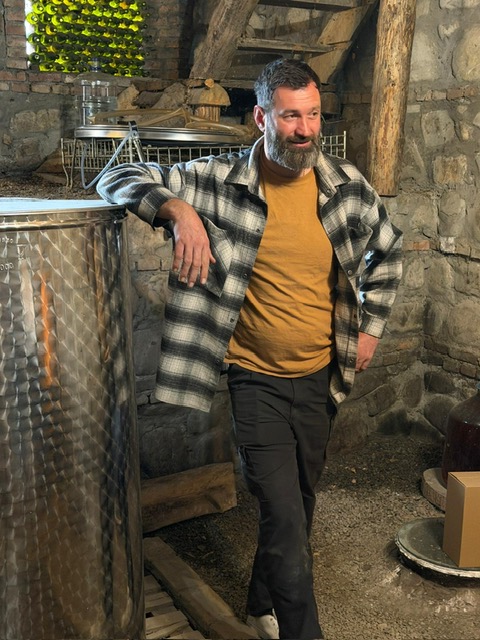
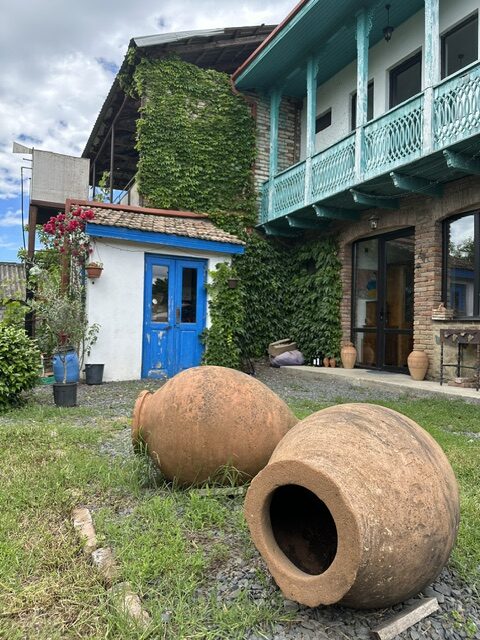
We began our visit in his wine cellar, located in a dug-out basement beneath the house. There we saw qvevri buried in the ground and a tool made from cherry bark used to clean these remarkable vessels. Shota shared the story of his family and how he became a winemaker.
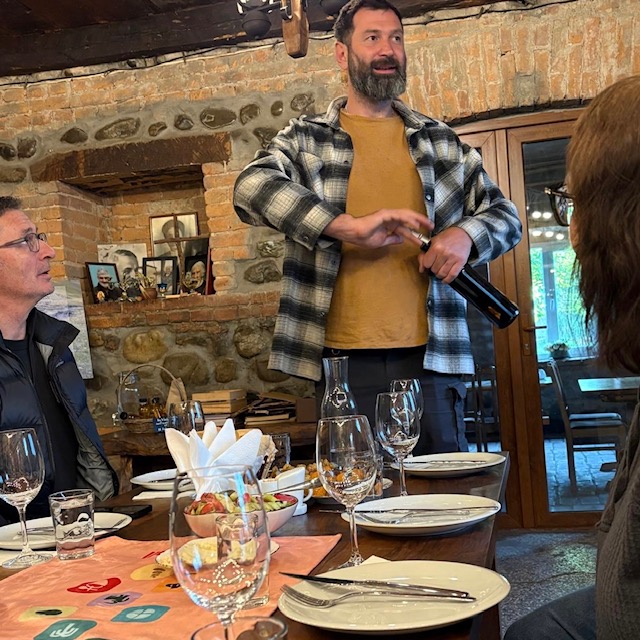
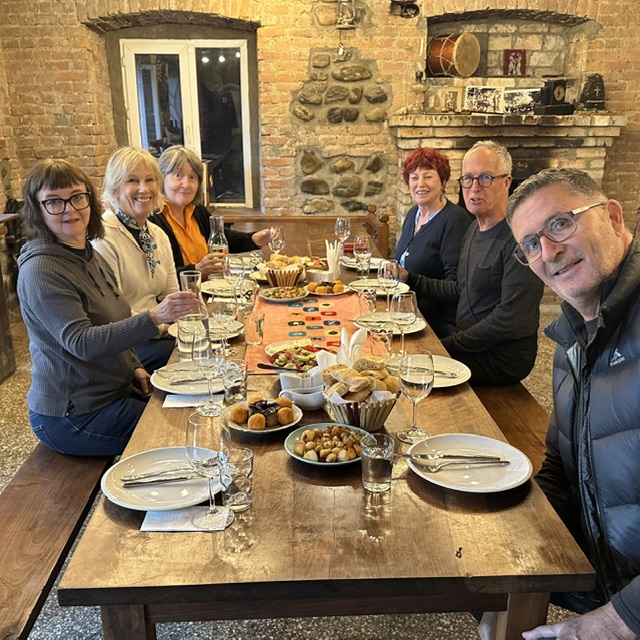
Dinner was served in the large dining room on the ground floor of Shota’s family home, a house built by his great-grandfather. We enjoyed a feast of Tushetian dishes, including datkhuri, a cheesy fondue-like dish that is eaten by dipping and slurping bread—a favourite from Shota’s childhood. We also sampled chakapuli, a traditional spring and early summer dish of lamb cooked with sour plums and generous amounts of tarragon. Fragrant and delicious, it was a highlight of the meal. Throughout the evening, we enjoyed both Shota’s amber and red wines, along with a little chacha for those who were keen.
Shota made several toasts during the meal, each one beautifully said, he is an eloquent man. The most poignant toast was about time and the importance of how we choose to spend it—food for thought indeed.
Zinobiani
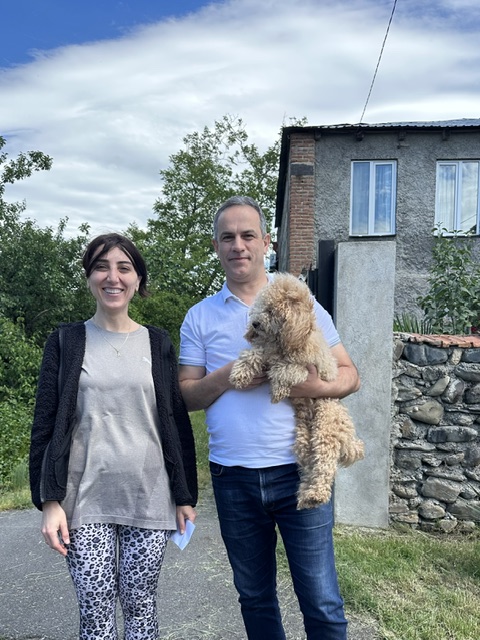
After a relaxing three-night night stay at Agarani Estate in Kakheti, it was time to pack our bags and head east to the tiny village of Zinobiani. Here we meet Ana Patchikashvili and Ana Aivazashvili who introduced us to the history of the Udi community.
We began with a visit to the local museum, overseen by Ana Aivazashvili. She shared the story of the Udi people, descendants of Christian Caucasian Albanians, who under the leadership of Zinob Silikashvili relocated from Azerbaijan to Georgia in the 1920s following conflict with Armenia. This museum is an important resource for the community. Funded by the European Union, it provides educational opportunities to younger members of the Udi community and is a source of great local pride.
A short drive from here took us to the home of Ana Patchikashvili where we were warmly welcomed into her garden. Beside the vineyard is the summer kitchen where we continued our conversation over lunch. We were introduced to several dishes that were new to us. Tchainhoofi, a pilaf influenced by Muslim culinary traditions, with rice, chestnuts, chicken, raisins and clarified butter. We also enjoyed Fakhlinhoofi, a comforting dish of beans and rice served with matsoni (Georgian yoghurt). Both dishes were delicious.
Before leaving, we climbed to the rooftop terrace and took in the view across the village. As is typical in rural Georgia, the houses have large yards filled with fruit trees, vegetable gardens and grapevines. The vines form a canopy over the courtyards, providing welcome shade in the hot summer months.
Our Shared Lands tour of Georgia is for 8 guests and departs every September.
See our destinations page for details or email sue@eatingadventures.co.nz
You can see the tour itinerary here.